Sangla Kanda Trek
February 24, 2026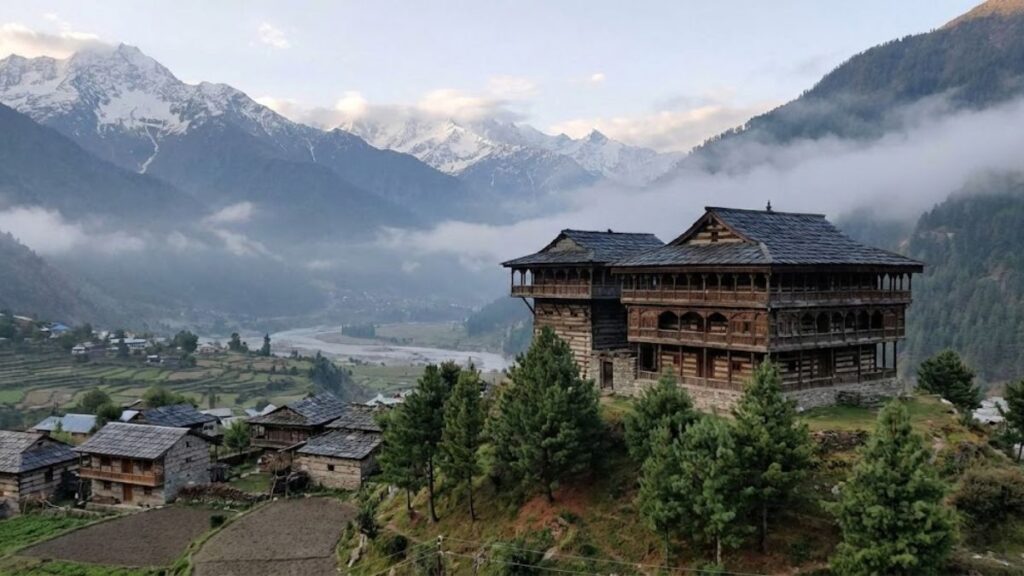
Kamru Fort is not just another old building tucked away in the mountains. It is one of the oldest wooden forts still standing in Himachal Pradesh — a living piece of Kinnauri history that has looked down on the Baspa Valley for more than five hundred years.
It sits quietly on a small hill above Kamru village, only twenty to twenty-five minutes by car from our place at Hotel Batseri. The Kamakhya Devi Temple inside is still alive with daily prayers. The second you walk through the gate, time feels different. Tall carved wooden pillars rise up. Beams lock together without a single nail. Slate roofs have turned dark and worn from centuries of snow and rain. The air is heavy with age — you can almost hear the footsteps of the men and women who built it.
Most people driving through stop for thirty minutes, take a few photos, and move on toward Chitkul. But if you care about history, architecture, old stories, or simply want something more than the usual quick sightseeing, Kamru Fort is a real find. It is one of the few places left where you can touch the past — smell the old wood and incense, walk the same floors generations walked, taste the culture in the food that still surrounds it, and feel something deeper than what any book or video can give.
When you stay here at Hotel Batseri, the whole experience changes. It becomes slower, safer, more personal, and much richer than if you were based anywhere else in the valley.
The Historical & Architectural Significance of Kamru Fort
Kamru Fort is believed to have been built sometime between the fifteenth and seventeenth centuries. Some local stories and the way the wood is worked suggest parts could be older still. It grew under the rule of the Bushahr princely state, which held most of Kinnaur for centuries. The fort was both a place to defend and a sacred site.
The craftsmanship is pure Kinnauri — beautiful and practical at the same time.
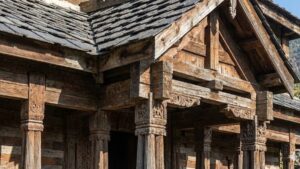
Interlocking wooden joinery runs through the whole structure. No nails, no metal at all. Beams and pillars are fitted with careful notches and mortise-and-tenon joints that have stood up to earthquakes, deep winter snow, and hundreds of years of wind and weather. It is a quiet proof of how clever Himalayan builders were long before modern machines.
Slate roofing covers everything. Thick local slate tiles overlap in rows. Even the heaviest monsoon or snow cannot get inside.
The carved pillars and panels are full of detail. Flowers, geometric shapes, mythical figures, protective symbols — all mixed together. You can spot lotus flowers, strange creatures, and signs that blend Hindu, Buddhist, and older local beliefs. It shows how Kinnaur has always been a place where different ways of life met.
The fort rises in layers. The Kamakhya Devi Temple sits at the very top. That mix of temple and fortress is something special to this region.
The Kamakhya Devi Temple is the real heart of the place. Dedicated to the goddess Kamakhya — a powerful form of Shakti — it is still worshipped every day. Local people come for blessings, especially during village festivals. The inner room is small, dark, intimate. Light comes only from oil lamps. The energy inside feels old and strong — many visitors say it calms them, grounds them.
Unlike so many heritage places that have been cleaned up and made safe for tourists, Kamru stays raw. The wood is black from centuries of lamp smoke and incense. The floors are smooth from thousands of feet. The priest — usually an older man from the village — is often there, and if you speak to him with respect, he will tell you a few things about the temple and the fort.
Why Kamru Fort Is a Goldmine for History Students & Archaeology Enthusiasts
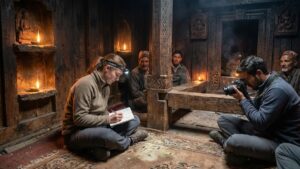
For anyone who studies Himalayan history, architecture, or local culture, Kamru Fort is like a classroom you can walk through.
The original building methods are right in front of you. The nail-free interlocking joinery is a perfect lesson in old Himalayan engineering — how people built to survive earthquakes and heavy snow without modern tools.
The carvings are full of mixed symbols. You see Hindu gods beside Buddhist signs like lotus and endless knot, and older local protective marks. It shows Kinnaur’s place at the meeting point of India, Tibet, and ancient indigenous ways.
Oral stories are still being told. The priest and older villagers share tales their grandparents told them — about Bushahr kings, how the temple was built, how the fort was used in hard times. Those are living sources you rarely find written down.
The place has not been over-restored. You can see real layers in the wood grain, the smoke stains, the worn floors. It keeps its original feel.
It connects directly to the wider history of the area — the Bushahr state that ruled Kinnaur for centuries, the politics of the western Himalayas before British times came.
For students, a visit here is not just looking. It is real work. You can photograph the joints, sketch the patterns, take notes on the symbols, record stories (with permission), and leave with things you cannot get from any book or website.
How Hotel Batseri Turns a Simple Fort Visit Into a Deep, Personal Cultural Journey
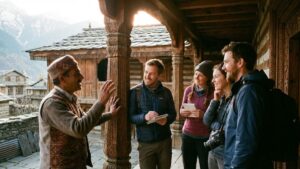
We are only twenty to twenty-five minutes away. We are the closest comfortable, riverside base in the valley.
Here is how we make Kamru Fort and the surrounding Kinnauri culture more meaningful, more accessible, and more memorable.
Personalized timing & planning tailored to you
We do not give everyone the same 9 am fort visit. We ask about your interests (history, photography, spirituality, food, architecture), your fitness level, your group size, and even your energy on the day.
Early morning (8 to 10 am) offers soft light, almost no people, perfect for photography or quiet reflection. Late afternoon (3 to 5 pm) provides golden hour on the wood carvings and valley views. We adjust departure so you avoid crowds and get the light you want.
Skilled local guides who bring the history alive
Our staff or trusted local guides (complimentary for Hotel Batseri guests) do not just point at things. They tell stories.
How the interlocking beams survived earthquakes for centuries. The legend of Kamakhya Devi and her connection to the Bushahr rulers. Why certain carvings mix Buddhist, Hindu, and pre-Hindu shamanic symbols. Local festivals and rituals that still happen inside the fort. Family stories passed down from people who grew up here.
For history and archaeology students, this is invaluable. Oral history you cannot find in textbooks comes straight from locals who live the culture every day. One archaeology student from Delhi said: “The guide showed me original beam joints and explained how they’ve lasted centuries. He shared stories his grandfather told him. No book or YouTube video can give you that.”
We treat you like family, not like a tourist
No rushed 30-minute stop energy. Staff walk at your pace (especially important for elderly guests or anyone with mobility needs). They wait while you take notes, sketch, photograph, or just sit quietly inside the temple. They never make you feel like you’re holding up the schedule. A solo traveler in her 30s wrote: “I spent almost two hours inside the temple and around the fort. The guide didn’t rush me once. He just answered every question and shared stories his grandfather told him. Felt like I was researching with a friend, not being herded.”
Connecting the fort to living Kinnauri culture
We do not stop at the fort gates. We help you taste, touch, and feel the culture that still surrounds it.
Traditional Kinnauri food. Back at the hotel we serve home-style meals that reflect what locals eat: siddu (steamed wheat bread), buckwheat pancakes (kankani), red rice, local greens, apricot chutney, and seasonal wild vegetables. Guests often say it feels like eating history.
- Apple orchard visits (seasonal). Meet local farmers, learn about grafting techniques passed down generations, pick fruit when allowed.
- Wool-spinning and handicraft interactions. Watch or try basic spinning/weaving with local women near Kamru.
- Village walks in Kamru and nearby. See how people still live in traditional houses, use slate roofs, dry chilies on rooftops, tend sheep, and maintain ancient farming practices.
Safe, comfortable, and stress-free return
Private cab back to the hotel (45 to 90 min). Hot chai waiting. Bonfire in the evening if you want to reflect on the day. You can process everything you saw without rushing or worrying about transport.
Amenities that make the whole day smoother
Early breakfast (from 7 am) so you can leave at sunrise. Packed hot water bottles and shawls for winter visits. Walking sticks, extra blankets, motion-sickness tablets if needed. Safe luggage storage at the hotel if you want to leave things behind.
Guest Voices – Real Kamru & Culture Moments from Our Guests
“I’m an archaeology student. The guide showed me original beam joints and explained how they’ve survived centuries. No textbook can give you that. I took notes for three hours.” — History student, 24, Delhi, September 2025
“My grandmother (78) wanted to see the old temple. The staff walked slowly with her, helped her up the steps. She prayed for 20 minutes and came back smiling like she was 20 years younger.” — Family with elderly member, December 2025
“As a photographer I needed golden-hour shots. The guide knew exactly when the light would hit the wood carvings. Best images of the trip.” — Content creator, Mumbai, October 2025
“I didn’t expect to care about local food. Then I ate siddu at the hotel after the fort visit. Suddenly the whole culture made sense. Felt like I understood Kinnaur, not just saw it.” — Solo traveler, Bengaluru, June 2025
“The guide shared folklore about the temple that his grandfather told him. I felt like I was given family stories, not tourist facts.” — International history enthusiast, Australia, September 2025
Final Thought – Why Kamru & Kinnauri Culture Deserve Your Time
Most Himalayan forts are ruins or heavily restored tourist spots. Kamru is different. It is still alive, still used, still guarded by the same families for centuries.
For history students and archaeology lovers, it is a rare primary source you can walk through. For anyone who wants more than photos, it is a chance to taste, touch, and listen to a culture that hasn’t been fully commercialized.
And when your base is Hotel Batseri, the experience becomes seamless: Closest comfortable stay (20 to 25 min) Personalized timing and transport Skilled local guides who share real oral history Warm, family-like care so you never feel rushed or alone Return to riverside quiet, hot food, and bonfire reflection
If you’re the kind of traveler who wants to go deeper, who wants to understand Himachal history by feeling it, not just seeing it, Kamru Fort and the living culture around it are waiting.
We’ll drive you there, walk at your pace, explain what matters, feed you the real food, and bring you home to the river.
Book direct at hotelbatseri.com or message us. We’d love to help you experience the last real fort of Kinnaur, your way.
See you soon.