How to Visit India’s Last Village Chitkul from Batseri
February 23, 2026
Kamru Fort & Local Culture
February 26, 2026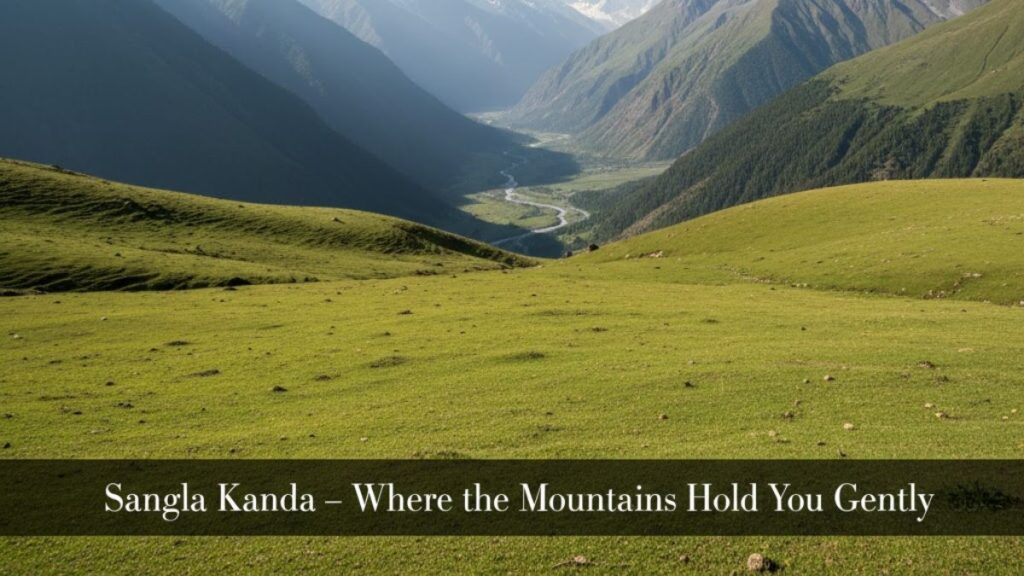
Sangla Kanda is one of those places in the Baspa Valley that I never get tired of recommending. I have hiked up there from Batseri so many times now and it still feels special every single trip.
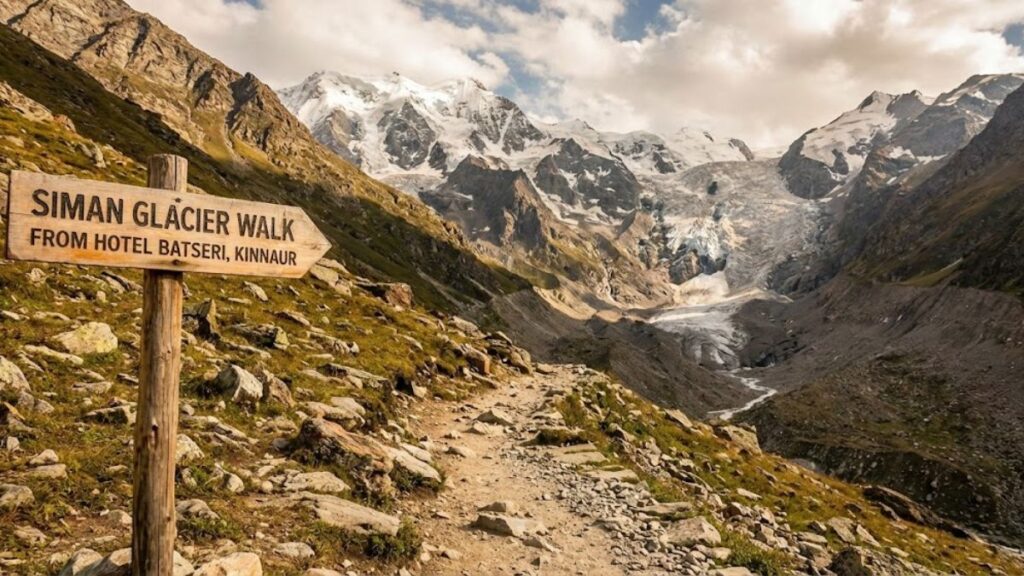
The meadow sits at about 3,200 to 3,400 metres right where the pine and deodar forests start to thin out and the land opens into this wide rolling grassland. When you step out onto it the views hit you all at once in a full circle. Snow peaks rise close on every side. The Baspa River and the valley far below look small and narrow, like a thin green ribbon squeezed between the mountains. On the clearest days you can see the distant Kinnar Kailash range sitting calm and huge on the horizon.
It is not the kind of dramatic viewpoint that gets all the hype on social media. There is something quieter and more peaceful about it that makes you want to sit longer, breathe deeper, and simply be.
From our family home right beside the river in this quiet corner of the valley we keep things simple and honest. Clean rooms with big windows looking out on the water, warm blankets, fresh home-cooked Kinnauri food, and genuine advice for travellers who come looking for the real mountains rather than luxury. My mother still makes thukpa and siddu the old village way with fresh herbs from our small garden. My father sits by the Baspa every evening watching the light change on the peaks. In recent years many guests staying with us ask about day hikes that feel rewarding without being exhausting. Sangla Kanda is always the first one I suggest.
Why Sangla Kanda Never Loses Its Magic for Me
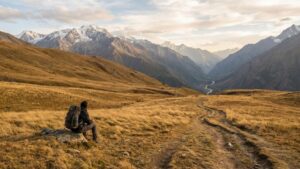
Even in the busy summer months the meadow never feels crowded the way some famous places do. You can walk long stretches of grass where the only sounds are the wind moving through the stems, the distant murmur of the river, and occasionally a bird calling somewhere overhead. That sense of having the mountains almost to yourself is what guests talk about most when they come back down.
It gives you that wide, peaceful Kinnaur feeling without wiping you out for the next few days. From our place in Batseri the whole day fits easily. Breakfast here by the river, head out in the morning, spend good time at the top, and return in the evening for hot chai and dinner. No need to carry overnight gear or sleep at high altitude. It slots neatly into any stay in Sangla or Batseri.
The trek is moderate and steady. Round trip walking usually takes four to six hours plus whatever time you want to spend at the meadow. The path climbs gradually on a clear trail. No ropes, no scrambling, no scary edges if you stay on the marked way. Elevation gain is 400 to 600 metres depending on where we drop you by jeep. You feel it in your legs, but it is gradual enough that most people manage comfortably with water breaks and a steady pace.
I have taken all kinds of guests up there over the years and almost everyone says the same thing when they return: it gave them that big open mountain feeling without leaving them exhausted.
How the Meadow Looks Different Every Season
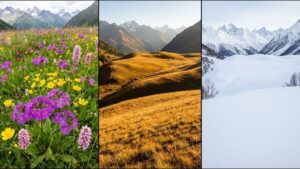
May and June – the wildflower months
The whole grassland turns into this explosion of colour. Purple primulas come up in thick patches everywhere. Bright yellow potentillas catch the sun and look like little gold dots scattered across the green. White anemones line the edges and open spots. Pink bistorts fill in the gaps. The colours overlap and mix so much that you can walk slowly for ten or fifteen minutes and keep seeing new patterns every few steps.
It is one of the last flower meadows in Kinnaur that still feels pretty untouched. Not flattened by hundreds of feet. Not full of trash or selfie sticks. You hear bees moving around. You catch that faint sweet smell in the air. The sun feels warm on your face. The wind moves gently through the flowers. It is the kind of place that makes you slow down without even trying.
September to mid-October – golden season
By then the flowers are mostly gone. The grass dries out to this rich warm gold that covers everything. Afternoon light gets sharper. The air turns crisp and clean. You can often see miles ahead with no haze. When the sun hits the grass just right it lights up like warm fire. Cooler temperatures make every breath feel fresh. People who come with cameras love this time. The light is soft but clear. Colours are warm but not over the top. The sky stays blue for days. You get those classic shots that look almost too good when you scroll back through them later.
December to February – winter silence
The meadow becomes a big silent snowfield. Everything white. Peaks sharp against the snow. It is beautiful in a very empty, quiet way. But it is not something you do casually. You need snowshoes or crampons, good winter layers, and you have to be ready for the road to the trailhead closing after fresh snow – sometimes for days. Most people wait for warmer months unless they really know winter hiking and have the gear.
Practical Details of the Trek
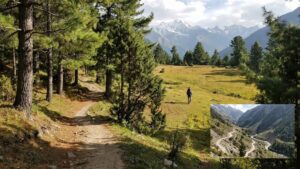
We usually arrange a jeep drop near Bhalu Dam or higher above Sangla town. It saves one to one and a half hours of boring road walking and keeps your energy for the climb and the meadow.
- Total distance round trip: about 5 to 8 kilometres (depends on drop point and how far you wander at the top)
- Elevation gain: 400 to 600 metres
- Walking time: 4 to 6 hours round trip + 1 to 2 hours at the top for photos, lunch, or just sitting
- Best time: May to June for flowers at peak, September to mid-October for golden grass and clear skies
- Winter: possible with snowshoes or crampons if experienced, but trailhead road often closed after snow – we check every day
What Makes It Feel Different from Other Treks
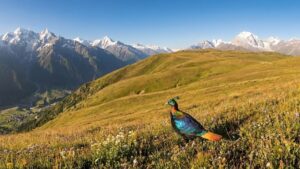
The 360-degree views surround you completely when you reach the meadow. Snow peaks rise close on every side. The valley looks tiny far below. Kinnar Kailash sits distant yet clear. It is the kind of view that makes you stop and stare for a long time.
In summer the wildflowers turn it into one of the last untouched big flower fields in Kinnaur. Colours shift with every step. Bees hum constantly. Sweet air surrounds you. The place feels alive and welcoming.
Even in peak season there are no big crowds like you find at Valley of Flowers. Long grass stretches where it is just wind, distant river, and maybe a bird. That space with mountains almost to yourself is what stays with people longest.
No need for tents or overnight gear. No sleeping at high altitude. Breakfast at the hotel, morning start, quality time at the top, return by evening for chai and rest. It fits easily into any Sangla or Batseri itinerary.
Wildlife adds extra joy. Monal pheasants are the highlight with males showing shimmering blue-green feathers. Musk deer slip quietly through the grass. Blue sheep appear on far slopes. Marmots pop up and whistle. Birds fly overhead. Early morning or late afternoon gives the best chances. A local guide who knows the signs and calls makes it happen more often.
How We Make the Day Easy and Comfortable?
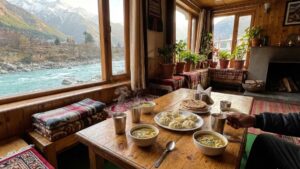
Everything flexible and adjusted to each group. The evening before or when you arrive we sit for a quick chat about ages, fitness levels, any health concerns like knees or asthma or past altitude trouble, and what you want from the day – photos, wildlife, quiet walking. That shapes the pace, stops, packing, and guide support.
Most groups leave around 8:00 to 8:30 after breakfast. Early birds start 6:30 to 7:00 for sunrise light and wildlife. Relaxed groups leave 9:30 to 10:00 if they want to sleep in.
Private or shared jeep to the trailhead near Bhalu Dam or higher. Local Kinnauri guide comes free – especially good for first-timers, families, older guests. They know the trail, wildlife spots, weather changes, and carry first aid, extra water, snacks, blanket.
Lunch packed fresh: roti, sabzi, eggs or paneer, fruit, nuts, chocolate, juice, hot water thermos. We add a shawl or blanket for sitting at the top and walking sticks if needed.
Return usually between 4:00 and 6:00 pm. Chai waiting at the hotel. Bonfire if the evening feels cool so everyone can share stories.
Things to Keep in Mind for a Safe and Good Day
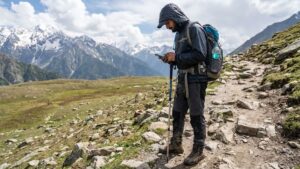
Altitude between 3,200 and 3,400 metres can bring mild headache, shortness of breath, tiredness. Drink 3 to 4 litres of water (we supply). Go slow. Take breaks often. Listen to your body. Anyone with heart or lung conditions should check with a doctor first.
Weather changes fast up high. We check the forecast the night before. Rain or snow makes the path slippery quickly. Bring a good rain jacket and extra warm layer because temperatures drop fast. The trail is clear but has some steep or loose stone sections. Proper trekking shoes with grip are essential. No sneakers or sandals. Walking sticks help balance – we provide them. Stay on the marked path because drop-offs exist in places. Descent slow, especially for knees.
Bears, leopards, snow leopards in the region but sightings extremely rare. Do not approach or feed any animal. Make noise while walking – talk, clap, tap your stick. If large animal seen (unlikely): stay calm, stay in group, back away slowly, never run. Common sightings: monal pheasants, marmots, blue sheep – watch from distance.
Carry all trash back down – no bins. Use toilet before start. Never pick flowers or plants – area protected. No wrappers, cigarette butts, food scraps left behind.
Ask before photos near private areas or people. Dress modestly near villages or temples. Do not damage trees or plants. Be polite to shepherds and farmers who protect the meadow every day.
Who Usually Enjoys It Most
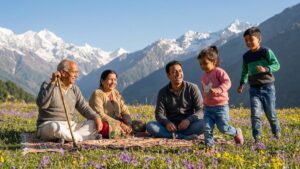
People 18 to 60 and reasonably fit usually do the full trek comfortably. Children 10 to 17 with parents do well and can shorten to a viewpoint if needed. Families with small children have succeeded with kids as young as 4 or 5 on shorter versions. Parents carry the little ones on steeper parts and everyone still has a great time. Full distance better for kids 8 and older who handle walking and altitude. Always listen to the child – turn back early if needed.
Guests 60 to 70 plus can manage slowly with guide and walking stick. They can stop at a scenic point if the full climb feels too much. Pregnant women should consult doctor – usually not advised above 3,000 metres.
Stories Guests Have Shared
A solo backpacker last August heard about it last minute from locals. He said the quiet views became the surprise highlight of his entire Kinnaur trip. He sat alone for hours and left feeling completely refreshed.
A family with kids aged four and ten called it their favourite day of the holiday. The little one rode on dad’s shoulders for the steeper parts. The older child ran through the flowers. Everyone came back smiling and full of stories.
A photographer from Delhi started early for sunrise. He described the light on the peaks and meadow as unreal and said it was worth every minute of the early wake-up.
A solo woman traveller last year appreciated the guide who gave her space but stayed close enough to feel safe. She sat in silence for two hours and said the peace stayed with her long after the trip.
Many guests mention the same things: the deep peace, the flower colours in season, how much less touristy it feels compared to other popular spots, and how smoothly the day flows when organised from the hotel.
When It Fits and Honest Alternatives
If you want a stunning high meadow experience in one doable day with peaks close, flowers or golden grass, and deep silence, Sangla Kanda is perfect. It works especially well if you stay in Batseri or Sangla and prefer day hikes without overnight complications.
If you want longer multi-day treks with camping or higher passes, look at options like Rupin Pass or routes toward Chitkul and beyond. Those cost more time and energy but offer different rewards.
Closing Thoughts
Sangla Kanda is not the hardest or longest trek in the Himalayas. But it delivers stunning high meadow scenery in one manageable day. Peaks feel close. Flowers or golden grass stretch endlessly. Silence runs deep.
From our riverside home in Batseri the whole experience stays smooth: flexible timing and jeep support, local guides who know wildlife, trails, and weather, family-style care so you feel relaxed, and return to hot food and comfort by the river.
If you want mountains that feel near, vast quiet spaces, and nature without crowds, Sangla Kanda delivers every time. We will pack fresh lunch, give you a walking stick if needed, go at your pace, show the hidden corners, and bring you home safe.
Book through hotelbatseri.com or message us directly. I look forward to getting you up there in the way that suits you best.
From our riverside home in Batseri, Still here, still learning, still opening the doors to the mountains.